
A book · a resource · an ongoing conversation

Learning is social. Let's design for it.

Designing Socially Dynamic Digital LearningTechnologies and Strategies for Student Engagement · Routledge, 2024

By Chaohua Ou · Director of Data and Learning Technologies, Lastinger Center for Learning, University of Florida

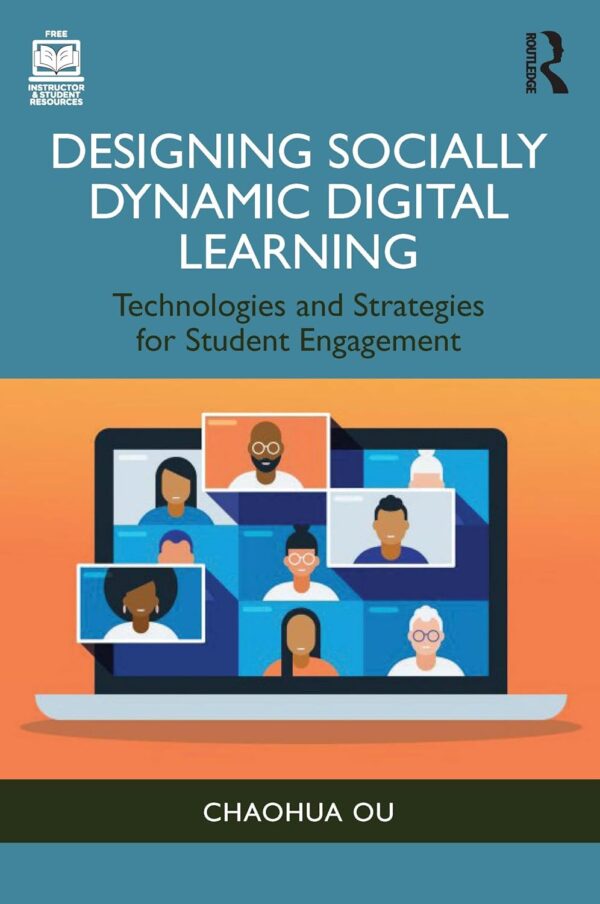
Book cover: Designing Socially Dynamic Digital Learning by Chaohua Ou

ISBN 978-1-032-43601-2

01 / The book

A practical guide to courses where students learn with each other, not just alongside each other.

Online and blended courses too often feel like a solo activity. This book shows how to design learning environments that foster social interaction and engagement among students.

It introduces state-of-the-art learning technologies and evidence-based pedagogical strategies that can be adopted and adapted across disciplines. You will find fresh insights and best practices for selecting, applying, and incentivizing digital technologies for social-forward yet outcomes-driven learning experiences.

5PARTS
10CHAPTERS
16INFOGRAPHICS

02 / The central idea

Engagement happens through interaction.

Technology alone doesn't create engagement. What matters is what learners do with the content, with one another, with their teacher, and increasingly with AI. Select one to see how the book approaches it.

Learner ↔ Learner

Social annotation, peer assessment and group projects that turn a roster into a working community.

Parts III and IV · Chapters 5–9

03 / Inside the book

Five contexts for engagement.

Each part takes one learning context and shows how technologies and strategies can support the interactions that drive engagement.

  1. I

    Multimedia LearningEngagement as catalyst

    1. Multimedia Learning and Student Engagement
    2. Engaging Students with Instructional Videos
  2. II

    Active LearningEngagement through participation

    1. Active Learning and Student Engagement
    2. Engaging Students with In-Video Questions
  3. III

    Collaborative LearningEngagement through community

    1. Collaborative Learning and Student Engagement
    2. Engaging Students with Social Annotation
    3. Engaging Students with Peer Assessment
  4. IV

    Project-Based LearningEngagement through real-world applications

    1. Project-Based Learning and Student Engagement
    2. Engaging Students with Online Project-Based Learning
  5. V

    Artificial IntelligenceEngagement in the age of AI

    1. Artificial Intelligence and Student Engagement

04 / Technologies & strategies

Sixteen infographics distill the book's strategies into one page each.

The book prints them in black and white; here are four in full color. Click any to view at full size.

Portrait of Chaohua Ou

05 / About the author

Chaohua Ou

An educational technology leader and instructional design expert with more than fifteen years of experience driving digital learning innovation in higher education and research.

Now
Director of Data and Learning Technologies, Lastinger Center for Learning, University of Florida
Before
Managing Director, AI-ALOE (NSF National AI Research Institute for Adult Learning and Online Education)
 
Assistant Director for Learning and Technology Initiatives, Center for Teaching and Learning, Georgia Tech

06 / AI & education

Notes from the Intersection of AI and Education

Evolving thoughts and experiences with AI in education: what I'm learning, experimenting with, and questioning along the way, one idea and reflection at a time.

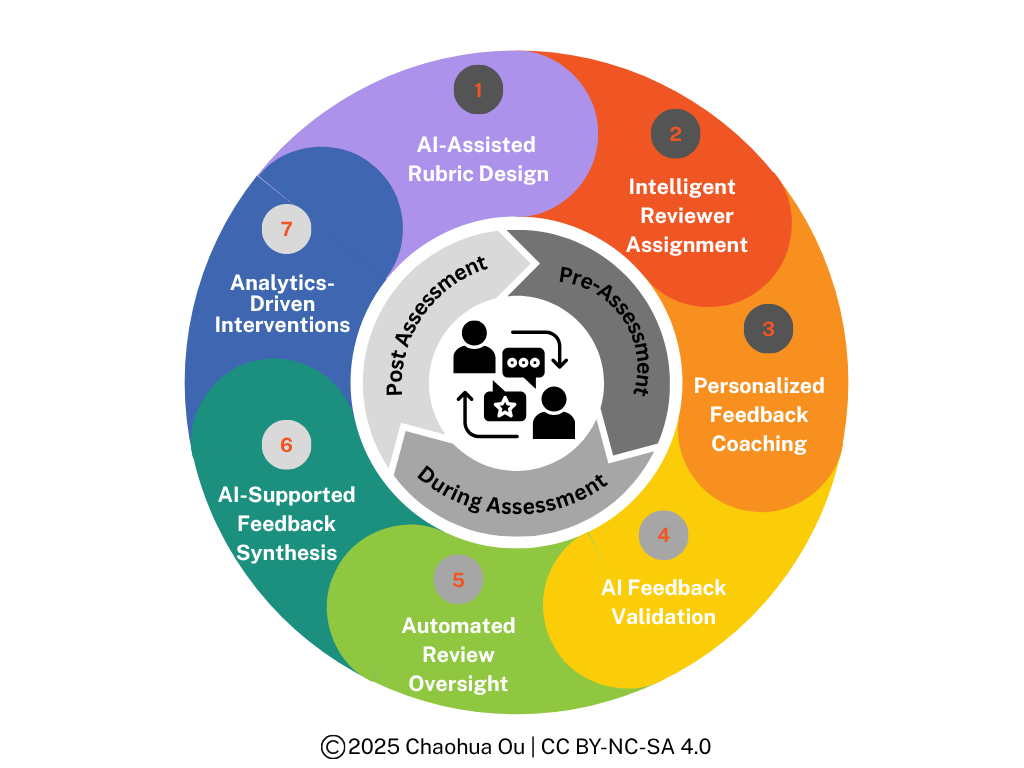
Seven elements of AI-augmented peer assessment arranged across pre-, during- and post-assessment stages

Designing AI-Augmented Peer Assessment

Discussion boards scale, but participation is uneven. A five-year study of 1,451 students compared peer assessment with online discussion, and the results point to a design where AI supports every stage of peer review.

Read the post →
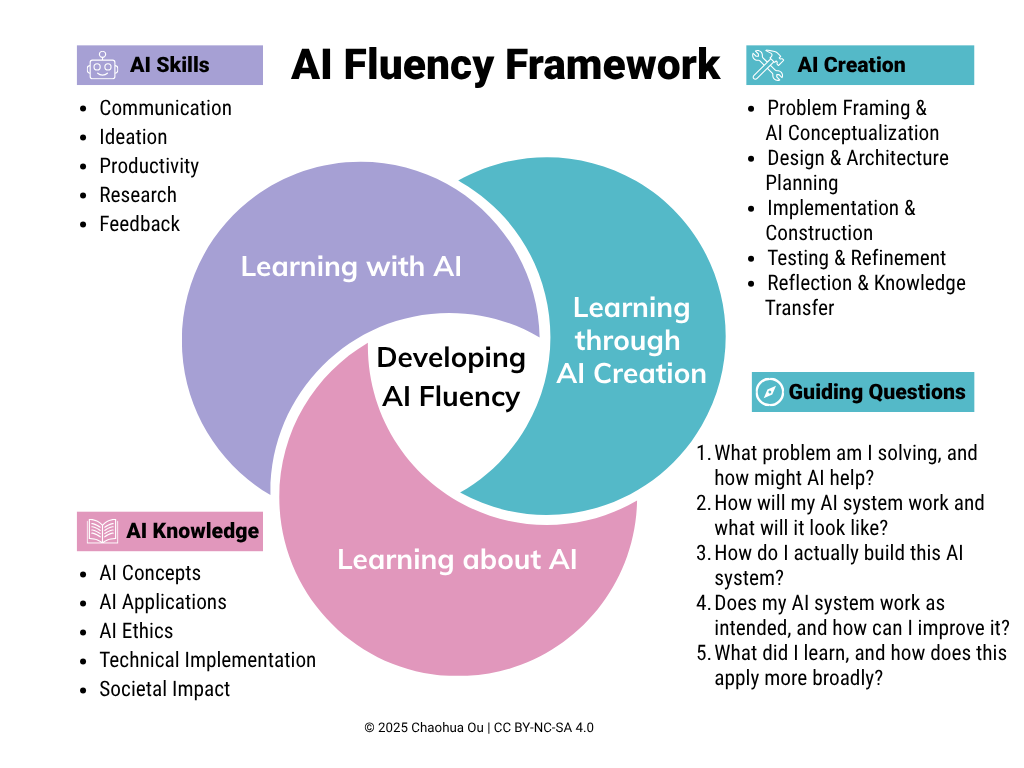
AI Fluency Framework: three overlapping circles for learning with AI, learning about AI and learning through AI creation, with AI skills, AI knowledge and AI creation around them

An AI Fluency Framework

Students in a six-semester online graduate course weren't only using AI; they were building with it. A paper with David Joyner at ACM Learning @ Scale describes this dual role and a framework for AI fluency.

Read the post →

07 / Contact

Questions, talks, or adoption inquiries?

Instructors adopting the book, researchers, and anyone working on engagement in digital learning are welcome to get in touch.